
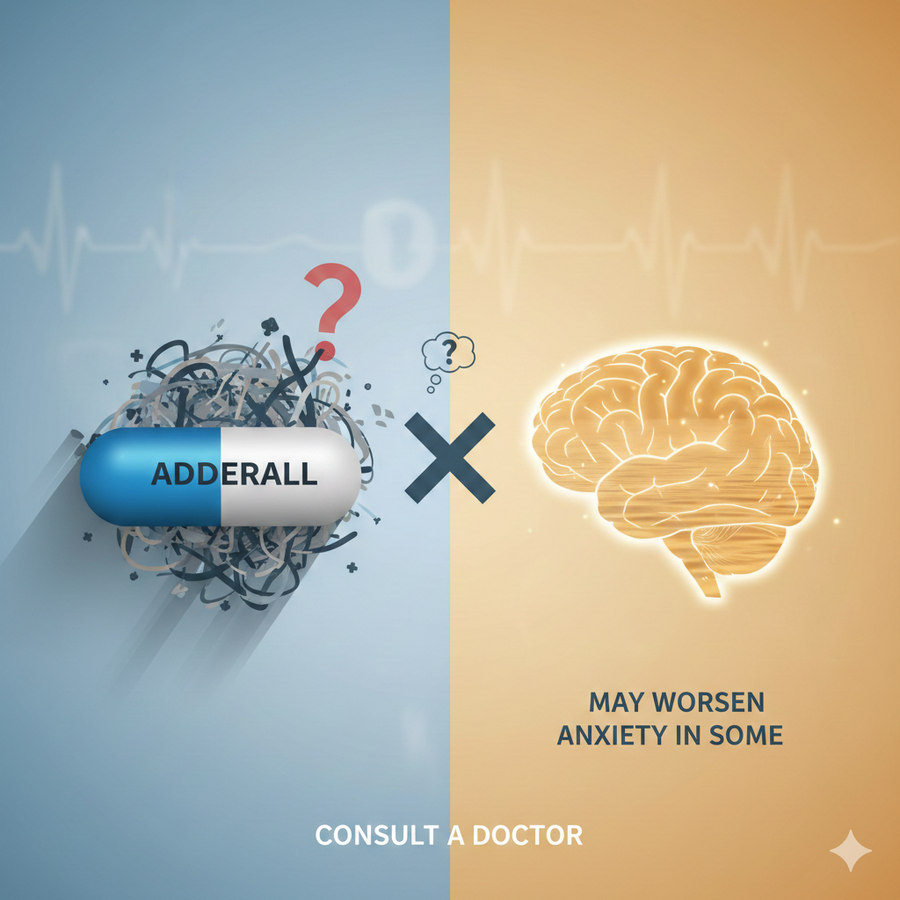
Anxiety and ADHD often occur together, which is why many people wonder: does Adderall help anxiety? Adderall is commonly prescribed for ADHD, but its effects on anxiety are not the same for everyone. In some situations, it may indirectly ease anxiety, while in others it can make symptoms worse.
This article explains the topic in a clear, balanced, and medically responsible way, helping readers understand the potential benefits, risks, and safer alternatives.
What Is Adderall?
Adderall is a prescription stimulant medication that contains amphetamine and dextroamphetamine. It is FDA-approved for:
- Attention-Deficit/Hyperactivity Disorder (ADHD)
- Narcolepsy
It works by increasing dopamine and norepinephrine levels in the brain—chemicals involved in attention, motivation, and alertness.
Understanding Anxiety Disorders
Anxiety disorders involve persistent worry, fear, or nervousness that can interfere with daily life. Common symptoms include:
- Excessive worrying
- Restlessness or tension
- Rapid heartbeat
- Difficulty concentrating
- Sleep problems
Common types include generalized anxiety disorder (GAD), panic disorder, and social anxiety disorder.
The Connection Between ADHD and Anxiety
ADHD and anxiety frequently overlap. Many people with ADHD experience anxiety due to:
- Difficulty staying organized
- Missed deadlines or poor focus
- Academic or workplace stress
- Social challenges
In such cases, anxiety may develop as a reaction to unmanaged ADHD symptoms, rather than as a standalone anxiety disorder.
Does Adderall Help Anxiety?
The short answer: it depends on the individual.
Adderall is not approved to treat anxiety, and it is not typically prescribed for that purpose. However, its effects vary depending on why anxiety is present.
When Adderall May Indirectly Reduce Anxiety
In some people with ADHD, Adderall may help indirectly by improving focus and daily functioning.
Possible indirect benefits include:
- Better task completion
- Reduced overwhelm
- Improved work or academic performance
- Greater sense of control
When anxiety is mainly caused by ADHD-related difficulties, treating ADHD may help reduce stress levels.
When Adderall Can Increase Anxiety
For many individuals—especially those with an existing anxiety disorder—Adderall may worsen anxiety symptoms.
Possible reasons:
- Stimulants activate the nervous system
- Increased heart rate or jitteriness
- Sleep disturbances
- Heightened alertness that feels like anxiety
Common anxiety-related side effects:
- Nervousness
- Irritability
- Restlessness
- Panic-like symptoms
Because of this, healthcare providers use caution when prescribing Adderall to people with anxiety.
Medical Perspective on Adderall and Anxiety
Most clinicians agree that:
- Adderall is not a treatment for anxiety
- Stimulants can increase anxiety in some people
- Careful assessment is needed when ADHD and anxiety coexist
In many cases, doctors may treat anxiety first or consider non-stimulant ADHD medications.
Who Should Use Extra Caution?
Adderall may not be suitable for individuals with:
- Moderate to severe anxiety or panic disorder
- Heart conditions
- High blood pressure
- Sleep disorders
- History of substance misuse
Medical supervision is essential.
Alternatives That Are Commonly Used for Anxiety
If anxiety is the primary concern, other options are usually more appropriate.
Common anxiety treatments include:
- SSRIs or SNRIs
- Buspirone
- Cognitive Behavioral Therapy (CBT)
- Mindfulness and stress-management techniques
- Lifestyle changes such as regular exercise and improved sleep
Managing Both ADHD and Anxiety
When both conditions are present, treatment may include:
- Lower stimulant doses
- Non-stimulant ADHD medications
- Therapy alongside medication
- Ongoing monitoring by a healthcare professional
An individualized approach works best.
Final Thoughts
Adderall does not directly treat anxiety, and for many people it can increase anxiety symptoms. However, in individuals whose anxiety is closely linked to ADHD-related challenges, it may indirectly reduce stress by improving focus and organization.